
What are braces, what are aligners?
Braces are small brackets bonded to the teeth and connected by a wire. The wire applies targeted pressure and is adjusted at regular intervals. The appliance stays in the mouth for the entire treatment, which is why it is called a fixed brace.
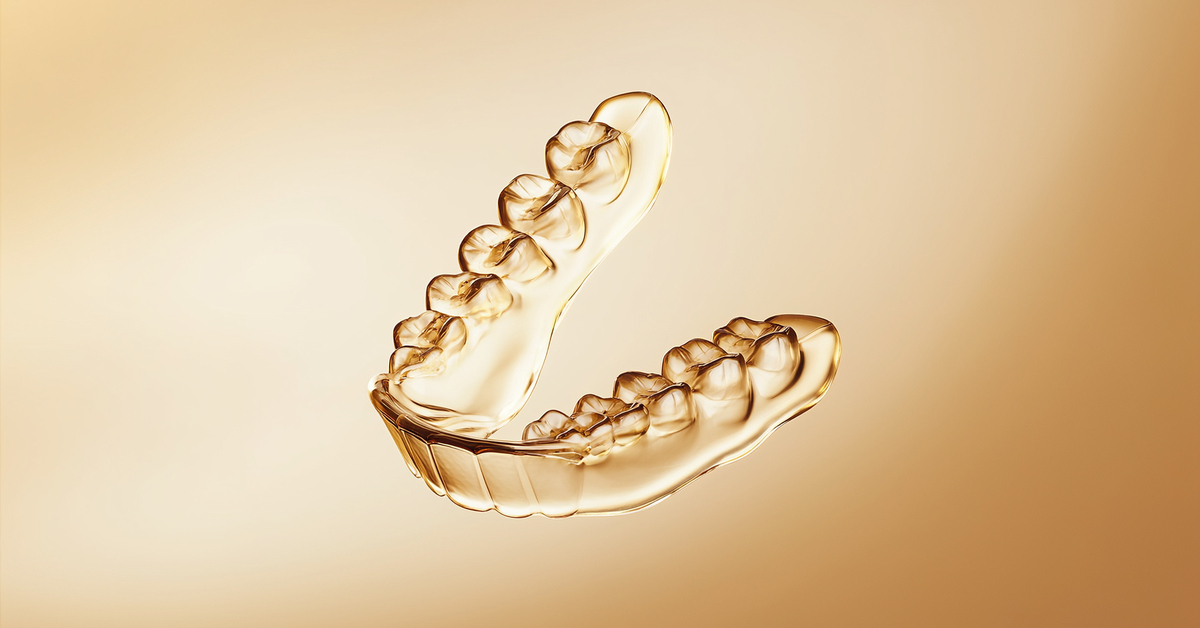
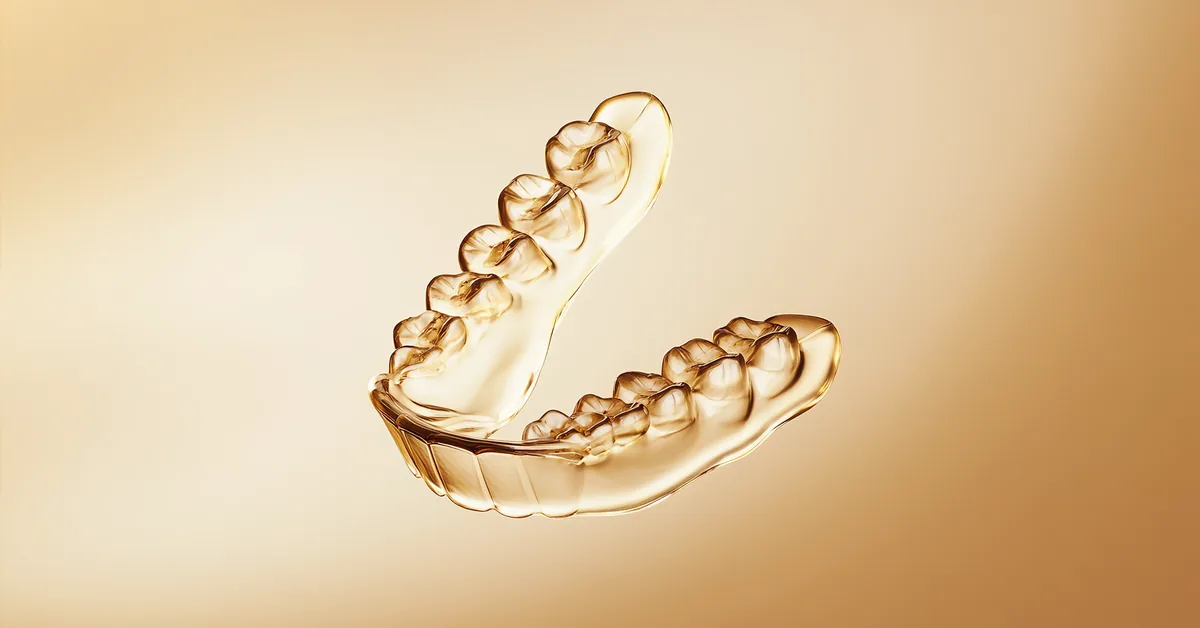
Aligners are clear plastic trays made individually for your teeth. Each tray moves the teeth a little further, and you switch to the next one every 1 to 2 weeks. You take the trays out to eat and brush your teeth. Aligners therefore belong to the removable appliances.
Braces come in three variants:
- Metal braces: the classic variant, clearly visible.
- Ceramic braces: tooth-coloured and therefore less noticeable.
- Lingual braces: the brackets sit on the inside of the teeth and cannot be seen from the outside.
Braces or aligners: the comparison
At a glance
Bonded in place, not removable · visible (except lingual) · cleaning takes more effort, special brushes needed · avoid sticky and hard foods · works without your involvement · check-ups every 4–8 weeks
Removable for eating and brushing · practically invisible · normal tooth brushing · no restrictions on food · requires discipline: wear 20–22 hours a day · check-ups every 4–6 weeks
What makes the difference in everyday life
- Visibility: aligners fit closely to the teeth and are hardly noticeable in conversation or in photos. Metal braces are seen immediately, ceramic braces less so.
- Eating: with aligners you eat as usual because you take the trays out first. With braces you should avoid sticky and hard foods, otherwise a bracket can come loose.
- Brushing: with aligners you brush normally and clean the trays with a soft toothbrush and lukewarm water. Plaque easily builds up on brackets and wires. Brushing takes longer and requires special brushes.
- Comfort: aligners have a smooth surface. Braces can rub against the cheeks and lips. With both methods, slight pressure after switching trays or after an adjustment is normal and eases within a few days.
How long does treatment take?
With both methods, the duration depends on the starting situation. Aligner treatment at our practice takes 2 to 10 months depending on the case, and for teenagers usually 4 months to 1.5 years. Fixed braces typically take 2 to 4 years.
After any tooth correction, whether with braces or aligners, a retainer is needed to keep the teeth in their new position. More in our article Retention after aligner treatment.
The drawbacks of both methods
No method is perfect. Anyone making a decision should know the downsides too.
- Aligners require discipline. The trays only work if you wear them 20 to 22 hours a day. Leaving them out often prolongs treatment or puts the result at risk.
- Aligners come out at every meal. Apart from water, you drink nothing with the trays in, and you briefly brush your teeth before putting them back.
- Attachments: for more complex movements we bond small, tooth-coloured bumps to individual teeth. They are barely visible and are removed without trace at the end.
- Braces are visible (except lingual braces) and make oral hygiene considerably more demanding.
- Braces restrict what you eat. If a bracket comes loose or a wire pokes, an extra appointment is needed.
Who is each method for?
Aligners are suitable for adults, teenagers and also for children from a certain stage of development. They are a particularly good fit if an inconspicuous correction matters to you and you wear the trays consistently.
Fixed braces can be the better choice if it is foreseeable that the trays will not be worn reliably. They work around the clock without anyone having to think about them.
It is often said that complex cases can only be treated with braces. That is no longer the case. With precise 3D planning, attachments and aids such as elastics, many complex malpositions can also be treated with aligners, for example crowding, an overbite or a deep bite. Whether this applies to your situation is shown by the examination.
We treat exclusively with aligners. That is why we check carefully at the first consultation whether aligners are suitable for your situation. With AI-supported 3D planning you see the planned result as a simulation before the first tray is made.
Fixed or removable brace?
A “removable” brace is one you can take out. This includes the classic appliances made of plastic and wire, familiar from children, and modern aligners. A fixed brace, on the other hand, stays in the mouth for the entire treatment.
We also treat children and teenagers with clear braces. In children, the appliance gently guides jaw growth, usually between the ages of 4 and 9. More on the pages orthodontics for children and orthodontics for teenagers.
What do aligners cost at our practice?
With both methods, costs depend on the starting situation and the extent of the correction. Our aligner prices for adults:
Aligner prices
The price includes individual 3D planning, the AI-supported simulation, all check-up appointments and the retainer. Depending on the case, attachments (from CHF 400 per jaw) or aids such as elastics (from CHF 800) may be added. Before treatment starts you receive a written cost estimate. All details in our article What aligner treatment really costs.
Basic health insurance generally does not cover orthodontic treatment, except in severe, clearly medically justified cases. Supplementary dental insurance contributes 50 to 75 % depending on the policy. What applies to children and teenagers is explained in our article Braces for children: what health insurance covers.
Your next step
Braces and aligners both lead to straight teeth. If an inconspicuous correction matters to you, you want to eat normally and you wear the trays consistently, aligners are a very good choice.
At the first consultation at our practice at Löwenplatz we assess your situation, show you the simulation of your result and discuss all options. More about aligner treatment in Zurich. Book online or call +41 44 363 90 90.
This article is for general information only and does not replace individual dental advice. Whether and which treatment is right for you is something we determine in a personal consultation based on your individual situation.