
What are receding gums?
With receding gums, the gum line pulls back and exposes the neck of the tooth, and in advanced stages part of the root as well. The teeth therefore look longer. The technical term is gingival recession.
Receding gums become more common with age. They usually progress slowly and cause no pain at first. That is why they are often noticed late.
How to recognise receding gums
- Longer teeth: the teeth look longer than before and the transition to the root becomes visible.
- Sensitive tooth necks: a twinge with cold, hot or sweet food.
- Notches or discolouration at the neck of the tooth. The root surface is often slightly darker than the enamel.
- Larger gaps between the teeth where food gets stuck.
- With periodontitis, additionally bleeding gums, bad breath or loose teeth.
The most common causes
Receding gums usually have an identifiable cause, and most of them can be treated:
- Periodontitis: the bacterial inflammation breaks down jawbone, and the gum follows. Receding gums are often the first visible sign of developing periodontitis.
- Brushing too hard: a hard toothbrush and scrubbing movements wear the gum away over time.
- Thin gums: some people naturally have thin gums that recede more quickly.
- Tooth position: teeth positioned far outwards in the jaw are often covered by little bone and gum.
- Grinding and clenching are discussed as a contributing factor.
- Smoking impairs blood flow to the gums and promotes periodontitis.
- Piercings in the lip or tongue that constantly rub against the gum.
Stopping receding gums: what helps?
The key is to treat the cause. Then the recession can be halted in most cases.
- Find the causeWe measure the gum pockets and use X-rays to assess whether bone has been lost. This shows what makes sense next.
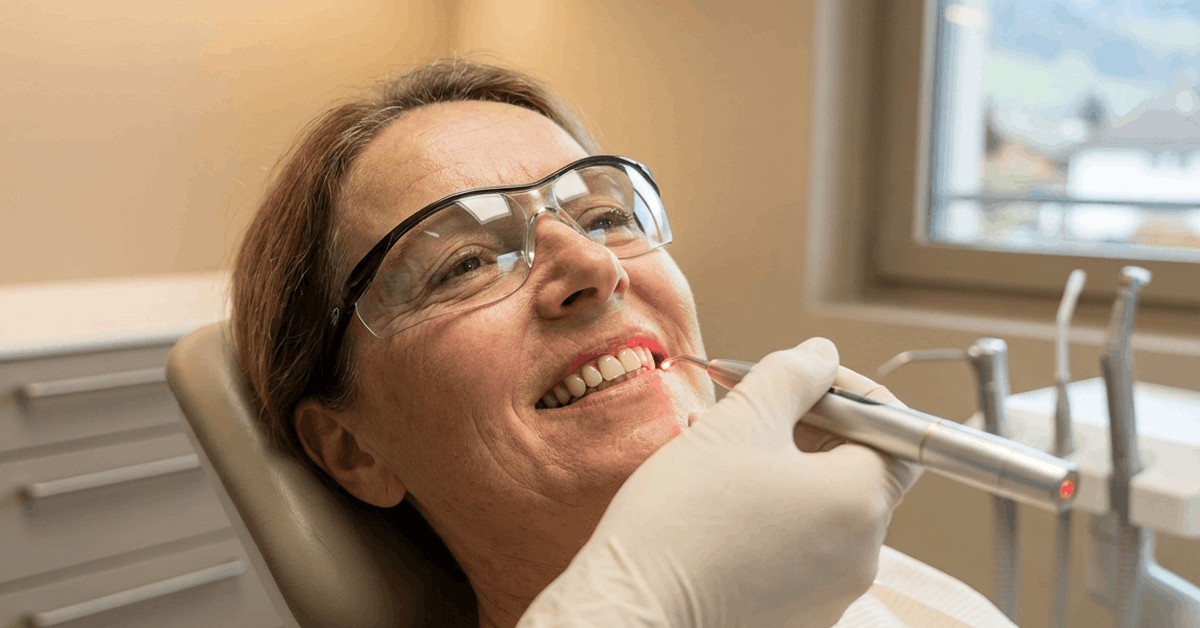
- Treat periodontitisIf periodontitis is present, we treat it with professional cleaning, gentle pocket cleaning and low-level laser therapy. Without a scalpel and with little discomfort, from CHF 160. More on the page periodontitis treatment.
- Brush gentlyA soft toothbrush, little pressure and no scrubbing movements. An electric toothbrush with pressure control can help. Clean between the teeth every day.
- Regular dental hygieneProfessional teeth cleaning removes deposits even where the toothbrush cannot reach (CHF 190). How often it makes sense depends on your findings.
- Treat grindingIf you grind or clench at night, a bite splint (from CHF 500) protects your teeth and their supporting tissue.
If you smoke, quitting improves the chances of preserving your gums.
What helps with exposed tooth necks
Exposed tooth necks are sensitive because the root surface is not protected by enamel. It is also softer than enamel and therefore more prone to decay.
- Toothpaste for sensitive teeth can ease the twinge when used regularly.
- Fluoride strengthens the tooth surface, for example through a fluoride toothpaste.
- Laser therapy: we also use low-level laser therapy for sensitive tooth necks, from CHF 90 per session.
More in our article Sensitive teeth: what really helps.
Do gums grow back? Can they be rebuilt?
Gums that have receded usually do not grow back on their own. The most important goal is therefore to stop the recession early and preserve the existing gum.
In certain cases, exposed tooth necks can be covered surgically, for functional or aesthetic reasons. The neck of the tooth is covered with gum, often using tissue from the palate (gum grafting). Whether this is an option for you is something we clarify after a thorough assessment as part of periodontal therapy.
Surgical coverage only lasts if the cause has been dealt with. That is why treating periodontitis or overly vigorous brushing comes first. Long-term success depends on oral hygiene and regular follow-up care.
When to see a dentist
Have receding gums checked as soon as you notice them. Especially if the gums bleed, the tooth necks are sensitive or teeth feel loose. The earlier the cause is found, the more can be preserved.
Book an appointment at our practice at Löwenplatz in Zurich, online or on +41 44 363 90 90.
This article is for general information only and does not replace individual dental advice. Whether and which treatment is right for you is something we determine in a personal consultation based on your individual situation.