Plaque, deposits, tartar — what's the difference?
Dental plaque is a soft, sticky bacterial film that forms on the teeth every day. As long as it's soft, it can be brushed away. But if it stays, minerals from the saliva get deposited — the plaque hardens into tartar. And that is so firm that no toothbrush can remove it any more.
Daily biofilm of bacteria, colourless to yellowish. Can be removed yourself with brush and floss — if you're in time.
Mineralised, firmly attached deposit — rough and often at the gum line. Can only be removed professionally.
How tartar forms
If plaque isn't thoroughly removed, hardening begins after just a few days. Hard-to-reach areas are particularly affected — the inner surfaces of the lower front teeth and the gum line, near which salivary glands open. That's exactly where tartar attaches most stubbornly.
Why tartar is harmful
- The rough surface is a magnet for new bacteria — deposits form even faster.
- Deposits at the gum line irritate the gums → inflammation and bleeding gums, up to periodontitis.
- The bacteria promote caries and bad breath.
- Discolouration makes the smile look dull and unkempt.
Once hardened, tartar is too firm to brush away — it can only be removed professionally and with the right instruments.
Our solution: professional dental hygiene
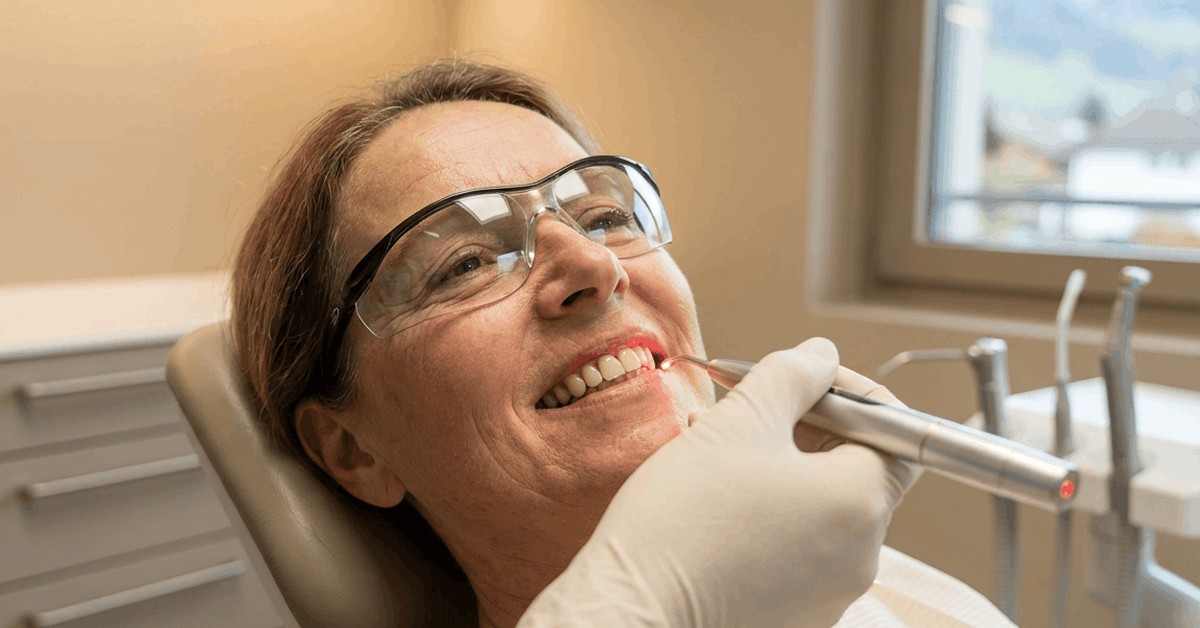
During professional dental hygiene, we remove tartar and deposits gently and thoroughly — including in places that can't be reached at home. We then polish the teeth (so new deposits adhere less) and protect them with fluoride. How a session works exactly is explained in the article professional teeth cleaning.
Cost
How to prevent tartar
- Brush thoroughly twice a day — deliberately at the gum line too.
- Clean the interdental spaces daily (floss or interdental brushes).
- One to two professional cleanings per year — depending on your tendency to form tartar.
Are you prone to tartar or was your last cleaning a while ago? You can find more about our dental hygiene in Zurich on the treatment page — or book an appointment directly at our practice at Löwenplatz.
This article is for general information only and does not replace individual dental advice. Whether and which treatment is right for you is something we determine in a personal consultation based on your individual situation.